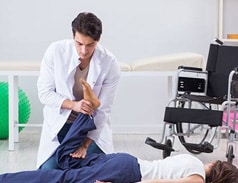
The Sitting-Rising Test (SRT) is one of the most talked-about “longevity tests” because it assesses something that becomes increasingly important as we age: your ability to safely get down to the floor and, more importantly, get back up again.
Unlike the 30-Second Sit-to-Stand Test, which primarily measures lower body strength and endurance, the SRT is a whole-body assessment. It combines strength, mobility, flexibility, balance, coordination and body awareness into one simple movement.
Research has shown that people who can sit on the floor and stand back up with little or no support tend to have better overall physical fitness and lower long-term mortality risk than those who need multiple points of support.
Why is the Sitting-Rising Test important?
Think about the last time you had to get down onto the floor.
Maybe it was to:
- Play with your grandchildren
- Do some gardening
- Pick something up under the bed
- Stretch after exercise
- Get up after slipping or falling
For many people over 50, it’s not getting down that’s the problem.
It’s getting back up.
Being unable to rise from the floor independently is associated with:
- Increased falls risk
- Reduced lower body strength
- Poor balance
- Reduced mobility
- Loss of independence
- Increased frailty
One of the greatest fears people have as they age is falling and not being able to get back up. The SRT directly measures this important life skill.
Why is it considered a longevity test?
The SRT became well known after a large study published in the European Journal of Preventive Cardiology followed more than 2,000 adults aged 51–80 years for approximately six years.
The researchers found that participants with the lowest SRT scores had a significantly higher risk of dying during the follow-up period compared with those who scored highly.
Importantly, the test does not predict how long you’ll live.
Instead, it reflects the overall physical qualities that contribute to healthy ageing, including:
- Muscle strength
- Balance
- Mobility
- Flexibility
- Coordination
- Confidence moving on the floor
In other words, the SRT is a simple way of measuring your body’s “reserve capacity”—how well it can cope with the demands of daily life.
How to perform the Sitting-Rising Test at home
What you’ll need
- A clear floor space
- Bare feet or flat shoes
- Comfortable clothing
- A non-slip surface
If you have poor balance, osteoporosis, significant arthritis, recent surgery or concerns about falling, have someone nearby to assist or perform the test with a physiotherapist.
Starting position
Stand comfortably with your feet about hip-width apart.
Try not to overthink the movement.
The test
Without using external support (such as furniture):
- Lower yourself all the way to a seated position on the floor.
- Then stand back up again.
The goal is to use as little support as possible.
How is it scored?
The test starts with 10 points:
- 5 points for sitting down
- 5 points for standing back up
You lose 1 point each time you use one of the following for support:
- A hand
- A forearm
- A knee
- The side of your leg
- Another significant point of support
You lose ½ point if you noticeably lose balance or wobble during the movement.
Examples
Score 10/10
- Sit down without using hands.
- Stand up without using hands.
Excellent.
Score 8/10
- One hand used when sitting.
- One hand used when standing.
Still very good.
Score 6/10
- Two hands needed.
- One knee used.
Suggests reduced mobility or strength.
Score below 5
Multiple supports required.
This usually indicates reduced strength, flexibility or balance and warrants further assessment.
What does your score mean?
| Score | Interpretation |
|---|---|
| 10 | Outstanding mobility, balance and strength. |
| 8.5–9.5 | Excellent functional movement. |
| 7–8 | Good, but there may be opportunities to improve mobility or strength. |
| 5–6.5 | Moderate limitations that may affect daily function. |
| Below 5 | Significant difficulty getting on and off the floor. A physiotherapy assessment is recommended. |
Why do people lose points?
There isn’t one single reason.
Common contributors include:
- Reduced leg strength
Often due to sarcopenia (age-related muscle loss).
- Poor balance
Your brain, inner ear, eyes and muscles all work together to keep you upright.
- Limited hip mobility
Stiff hips make sitting cross-legged and standing difficult.
- Tight ankles
Reduced ankle flexibility affects your ability to squat and stand.
- Reduced core strength
Your trunk muscles provide stability during the movement.
- Fear of falling
Many people are physically capable but lack confidence.
- Pain
Hip, knee or back pain often leads people to use their hands for support.
Can you improve your score?
Yes.
The SRT is highly trainable because it reflects several physical qualities that respond well to exercise.
A physiotherapist may prescribe exercises such as:
- Sit-to-stands
- Squats
- Step-ups
- Lunges (when appropriate)
- Single-leg balance
- Hip mobility drills
- Ankle mobility exercises
- Core strengthening
- Floor transfer practice
- Progressive resistance training
As strength, mobility and confidence improve, most people find they gradually need fewer points of support.
Although the SRT is a useful screening tool, it shouldn’t be attempted if you have a high risk of falling, severe osteoporosis, recent fractures or joint replacement surgery without first seeking professional advice.
The test also doesn’t diagnose the cause of difficulty. A lower score may be due to pain, stiffness, muscle weakness, balance issues, neurological conditions or simply unfamiliarity with floor movements.
If you struggle to get on or off the floor, a physiotherapist can assess your movement, identify the limiting factors and develop a personalised program to help you regain confidence and independence.
The Sitting-Rising Test isn’t about showing off your flexibility—it’s about measuring one of the most practical skills for healthy ageing: being able to get up from the floor without help.
A high score reflects a combination of strength, balance, flexibility and coordination, all of which are closely linked to maintaining independence as you age. While the test has been associated with long-term health outcomes, it’s best viewed as a snapshot of your current functional fitness, not a prediction of your lifespan.
Perhaps the greatest value of the SRT is that it gives you a starting point. If your score isn’t where you’d like it to be, targeted physiotherapy and strength training can improve the very qualities the test measures—helping you stay active, resilient and confident for many years to come.
Reference
Araújo CGS, Ricardo DR, de Almeida MB, et al. Association between sitting-rising test performance and all-cause mortality in adults aged 51–80 years. European Journal of Preventive Cardiology. 2014;21(7):892–898.